Role
Company
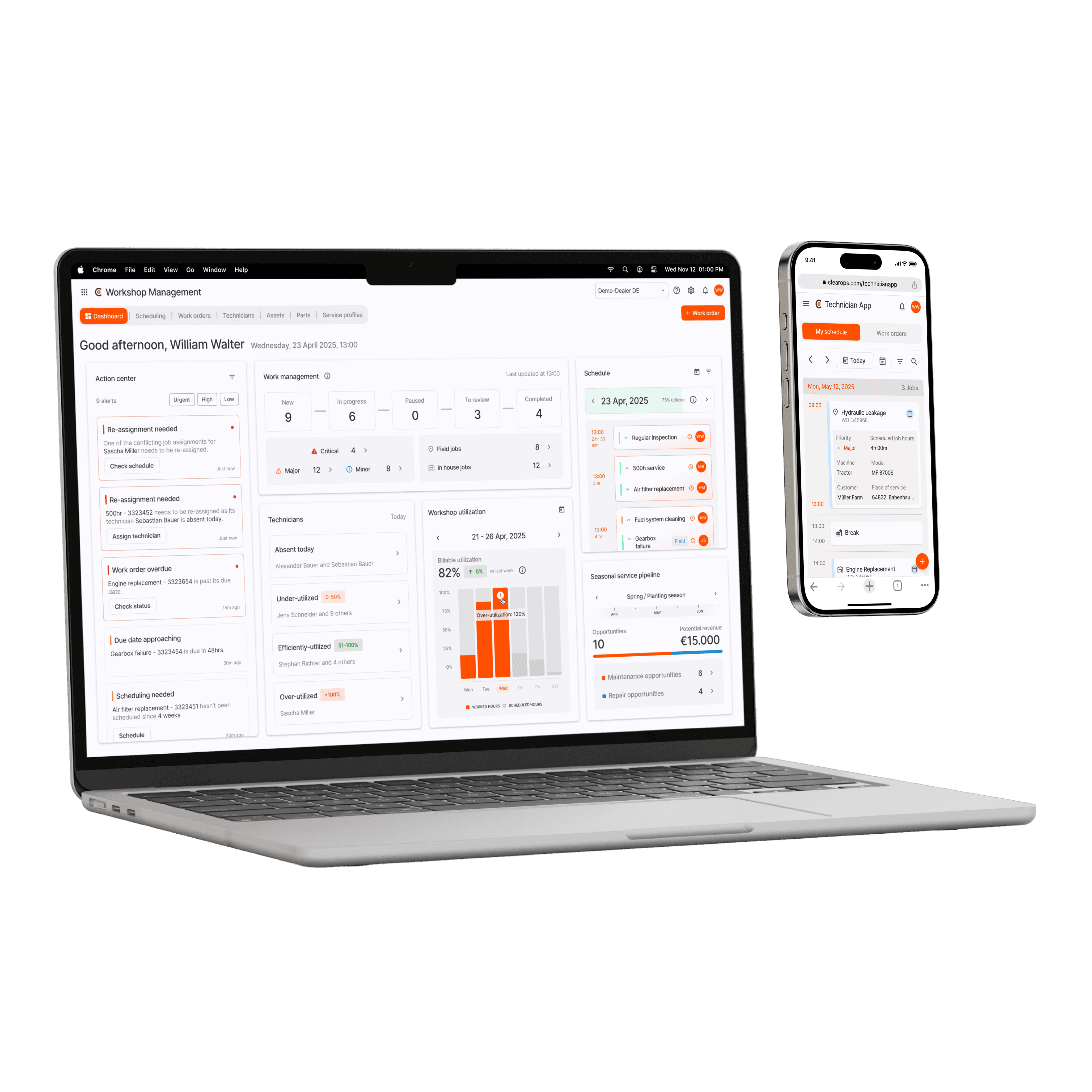
Designed an integrated Field & Workshop Management solution, unifying workflows for technicians & workshops to improve efficiency, & service quality.
Overview
Challenge: ClearOps had a legacy workshop tool that was non-intuitive & a technician mobile app that suffered from near-zero adoption.
Workshop managers were stuck using whiteboards & Excel to bridge the gap between their ERP data & the shop floor, leading to data chaos, un-billed labor hours, & inefficient scheduling.
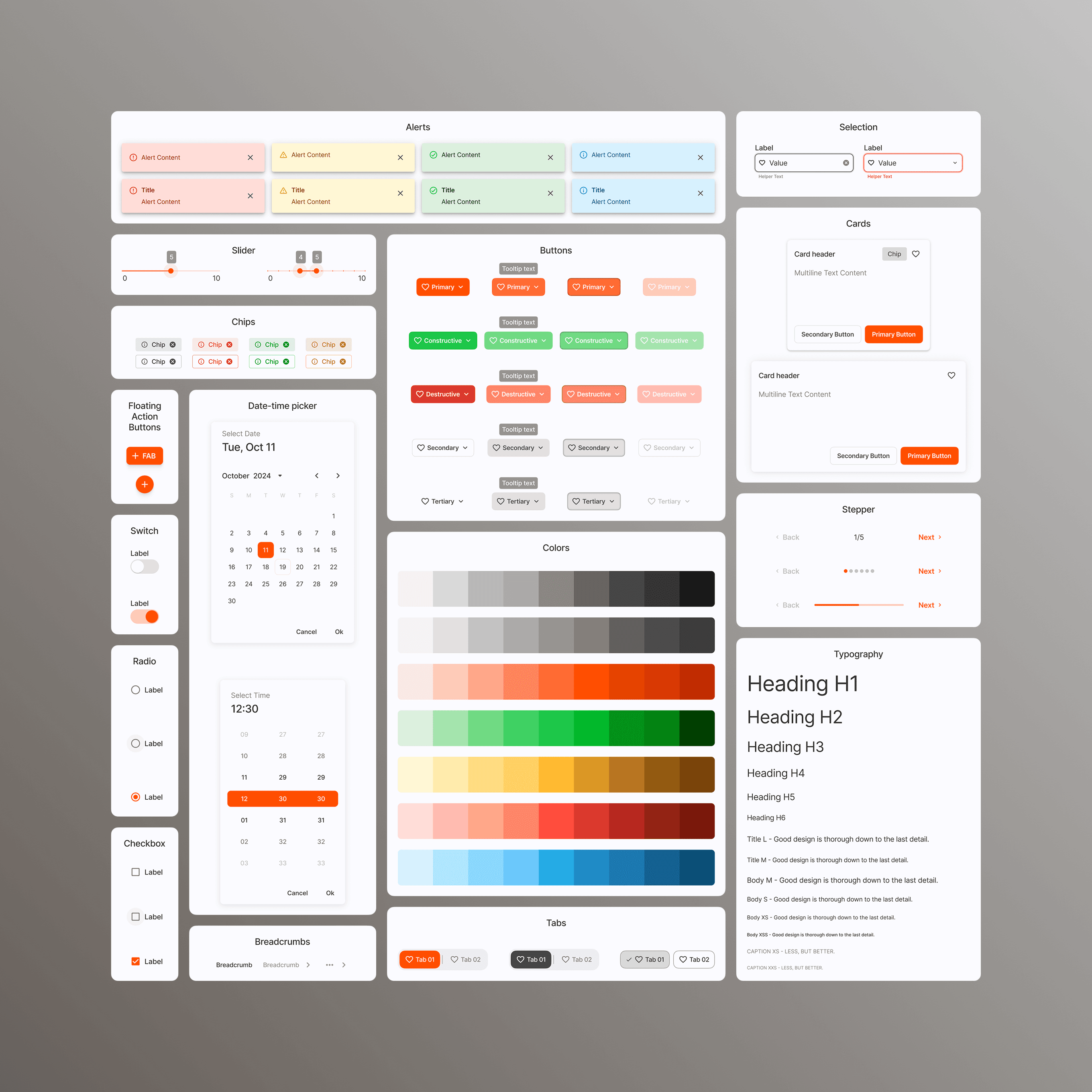
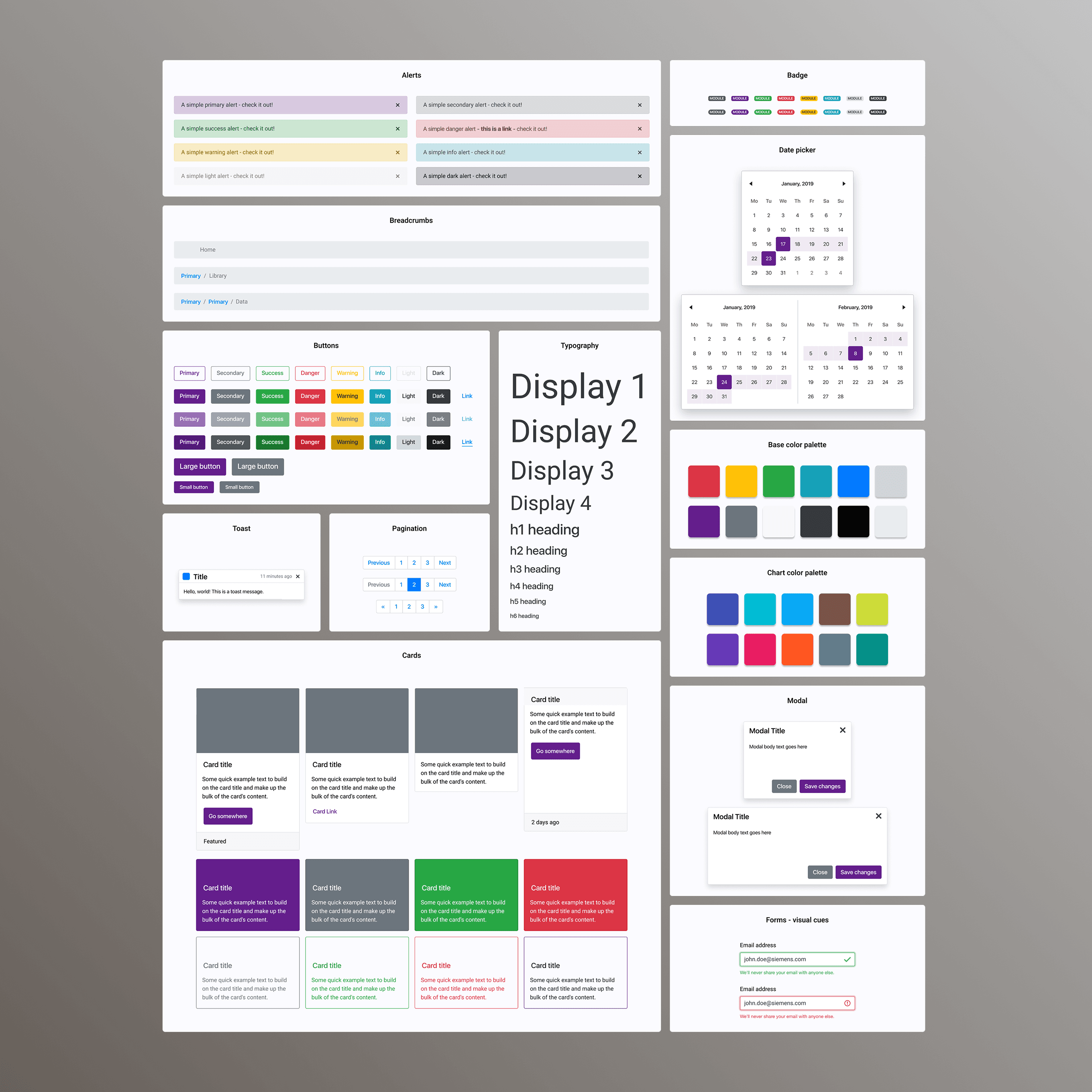
Solution: A high-density workshop dashboard & a utility-first mobile app built on Material Design. I leveraged AI Personas to stress-test designs & introduced AI Voice Protocols to solve real-world environmental barriers.
Impact: Took the Technician App from €0 to €36,000 ARR in one year. Adoption: Achieved 100% adoption among pilot users (200+).
Efficiency: Reduced manual status-checking by 30%.
Strategic constraints
Designing for reality
ERP overlay: The rigid ERP/DMS data needed translation into human-friendly Work Order cards without breaking backend logic.
Environmental realities: Technicians work in environments with greasy hands. The app needed a High-Contrast, Large-Affordance UI.
Zero-signal problem: Machines break in remote areas; the app needed to work in offline mode as well.
Discovery
Overcoming legacy failure
Through research with pilot customers at EIK, the largest dealership in Norway, I identified why the legacy tools were failing:
Planning gap: Managers made decisions on physical whiteboards & papers because the software was too slow for real-time interruptions.
Lack of data: The legacy app was so non-intuitive to use that technicians stopped logging work on the platform, causing billable leakage in the system.
Fragmented data: There was no central pulse, forcing managers to hunt through lists to find bottlenecks.
Workflow
Lifecycle of a work order
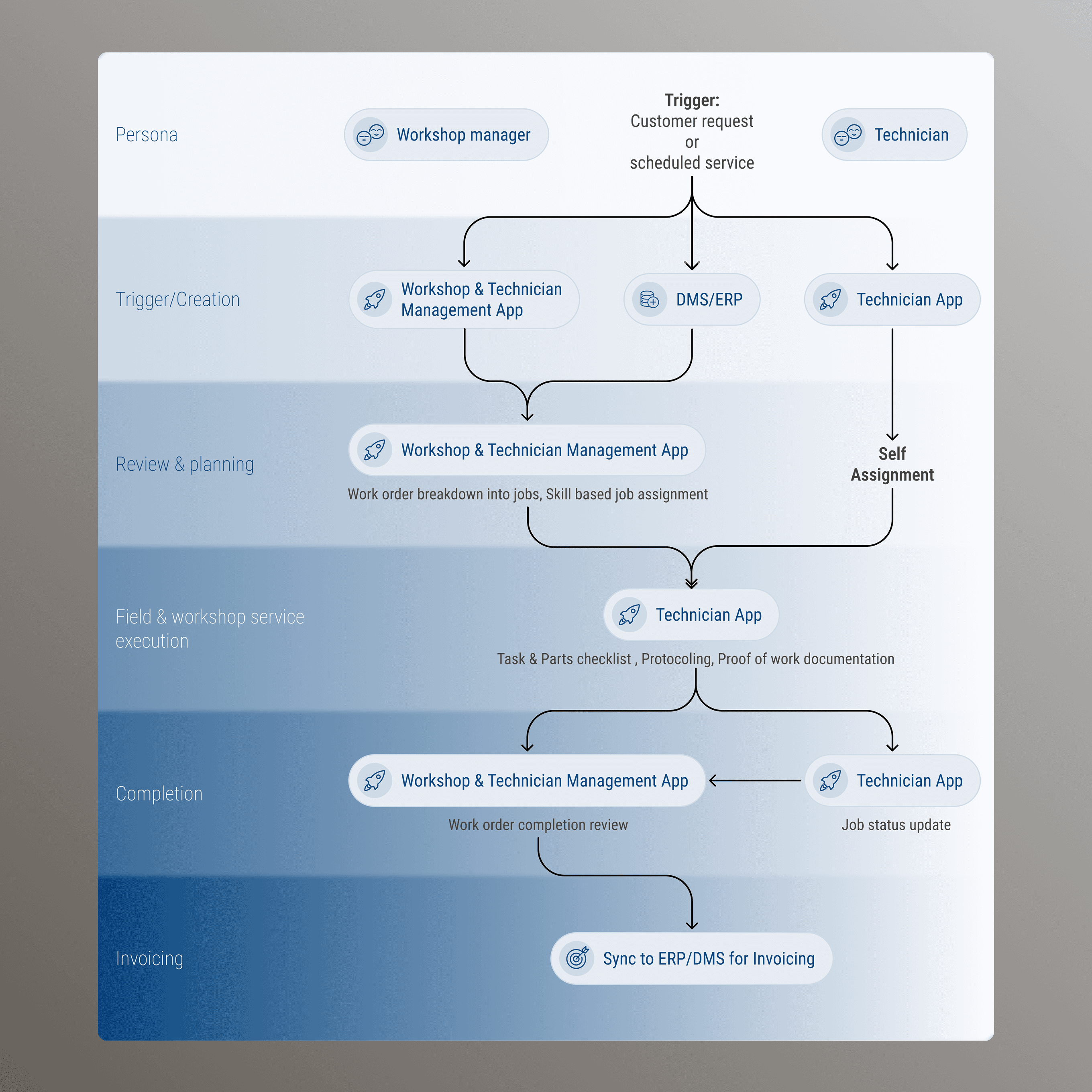
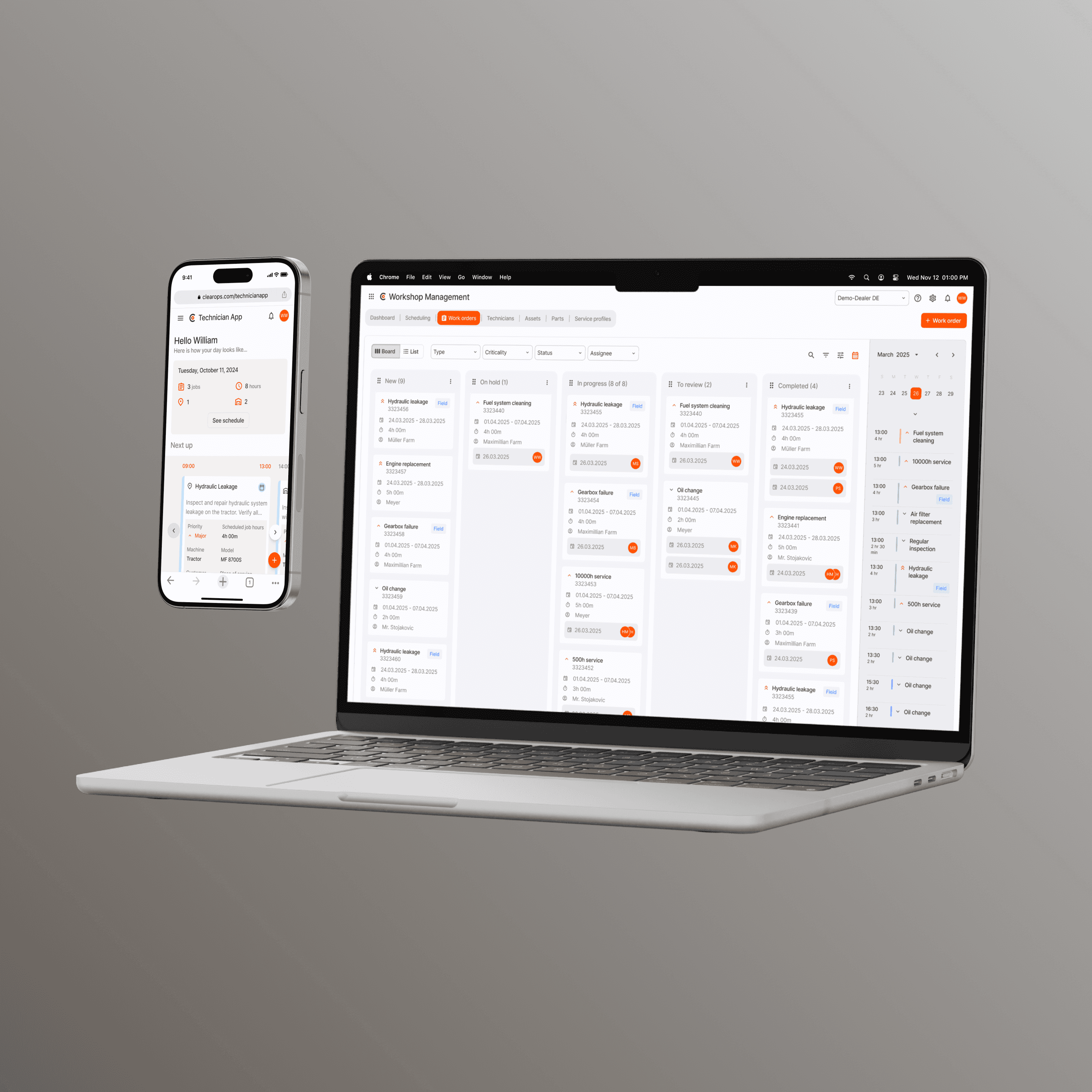
ERP handshake: Data is pulled from ERP/DMS into our smart-filtered Work Order list.
Dispatch: The Manager assigns jobs in the Workshop Management App.
Execution: The Technician picks up the job as per the schedule in the app. They use the Time-tracking UI to log their working time and attach proof of work photos.
Closing the loop: Upon completion, signatures & work data sync back to the ERP/DMS for immediate, accurate invoicing.
Personas
Workshop manager
Primary goal: Operational oversight & billing
Environment: Office/shop floor (high noise)
Physical context: Frequent interruptions
Mental model: Data-driven / efficiency
Technician
Primary goal: Precision repair & safety
Environment: Remote fields/basements (low signal)
Physical context: Greasy hands & gloves
Mental model: Task-driven/tool-oriented
My strategic process
AI-augmented design
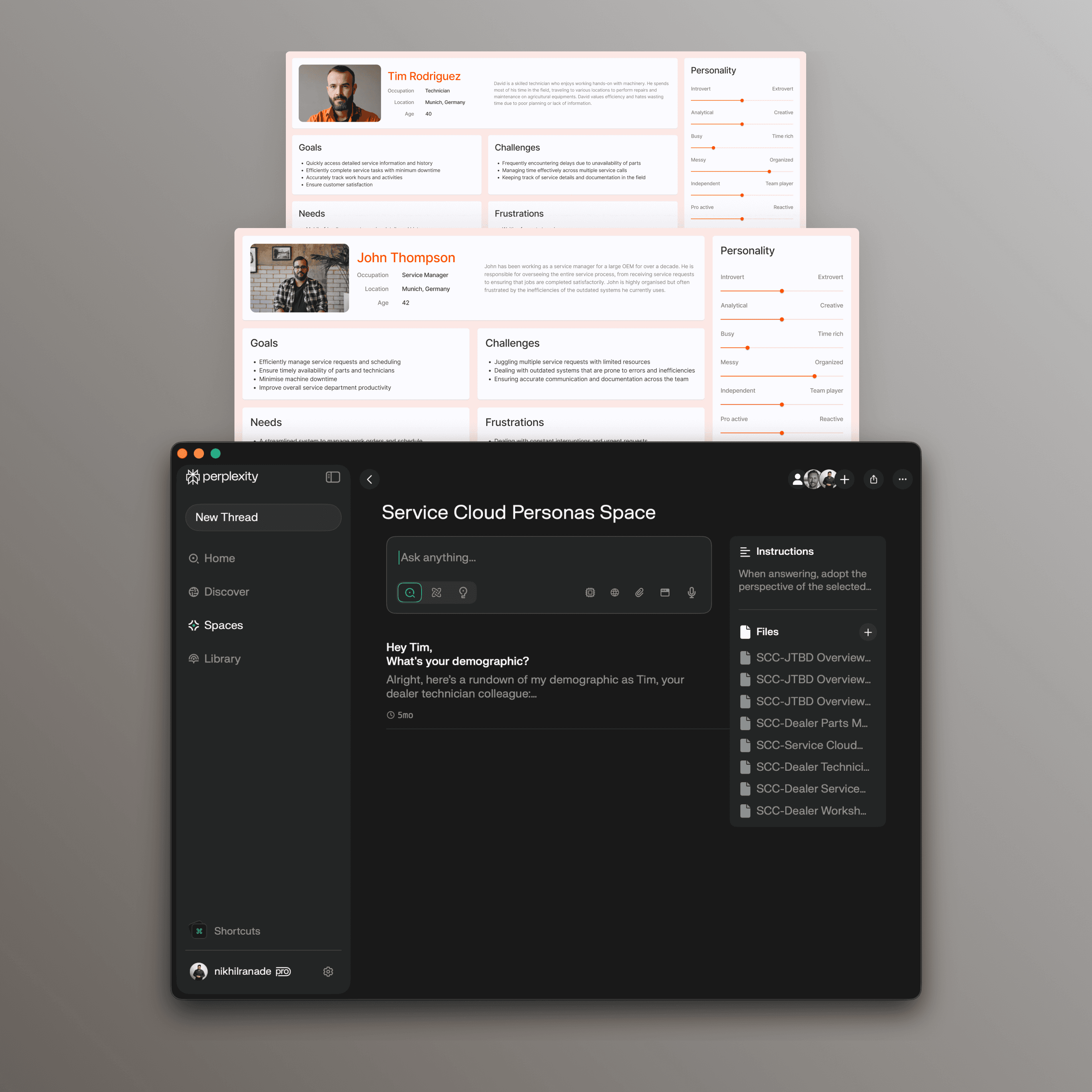
As a solo designer, I leveraged an AI-integrated workflow to scale my impact & pressure-test my decisions without a large research team.
Synthetic user testing: I fed our persona documentation into Perplexity AI to create digital twins of our users. I could then prompt the AI to review my designs from the perspective of a stressed workshop manager or a field technician, helping me identify friction points before they reach a developer.
Rapid brainstorming & mockups: I utilized AI tools to accelerate initial brainstorming & generate structural mocks, allowing me to move from concept to high-fidelity Material Design layouts in record time.
Solution
A field service and technician management application for the workshop featuring:
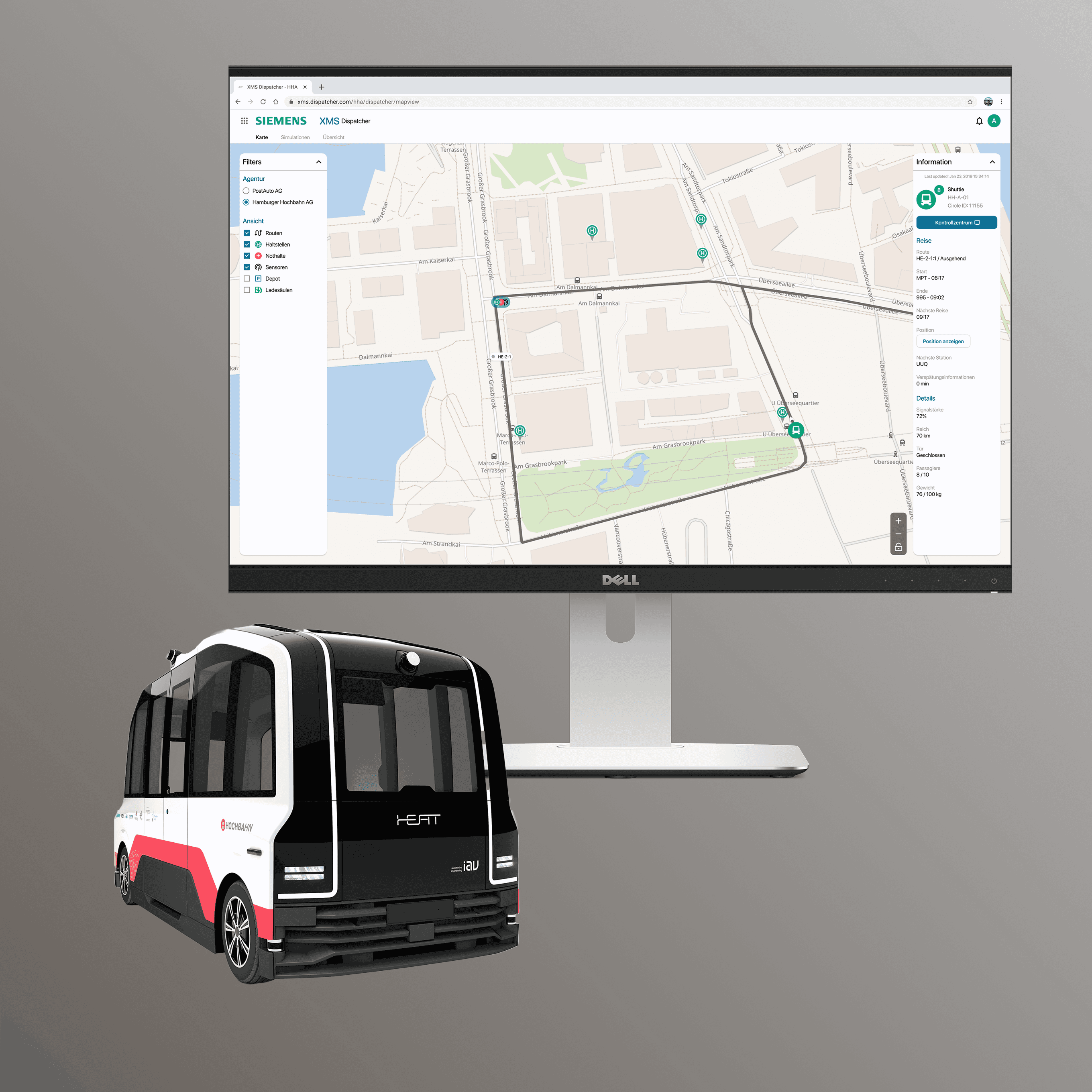
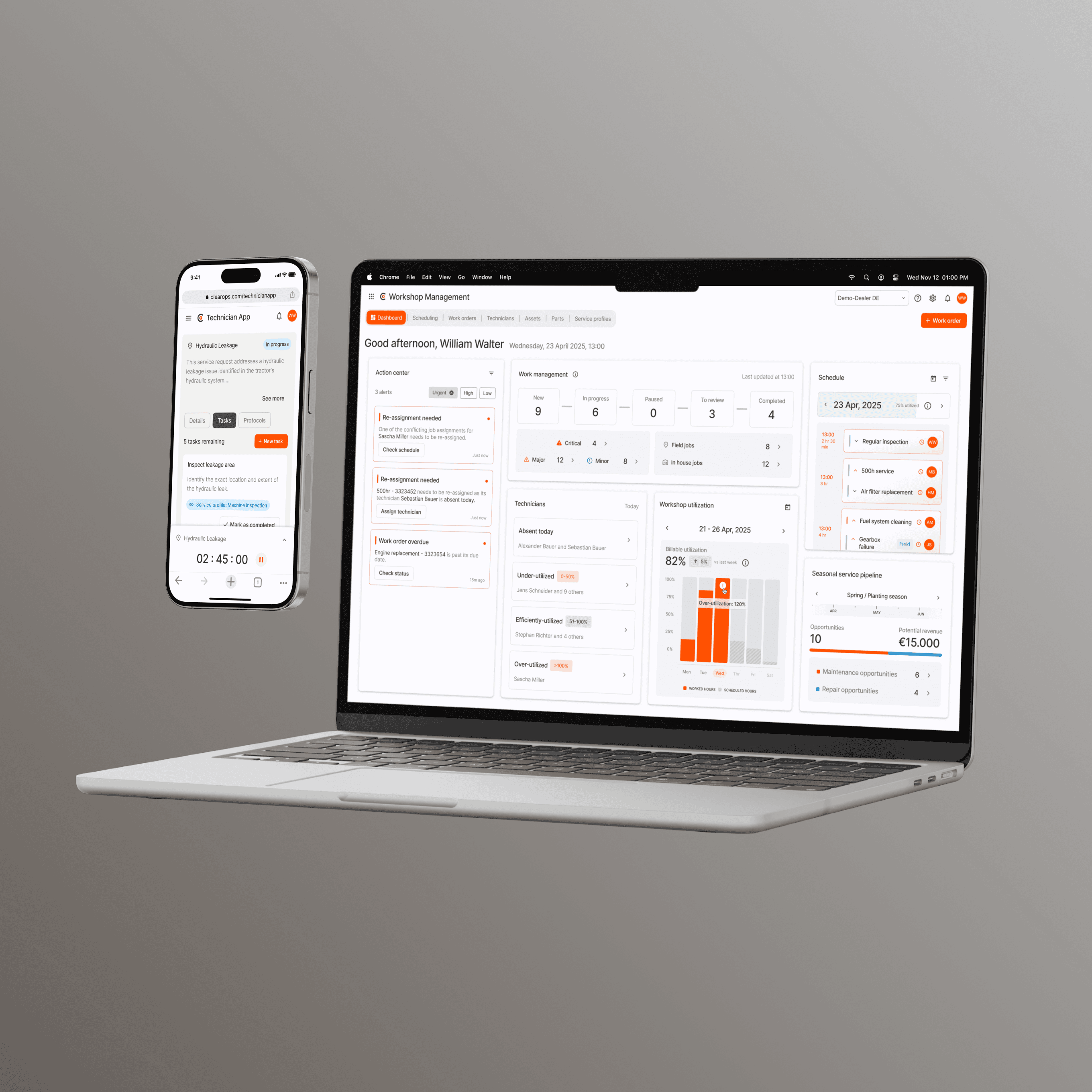
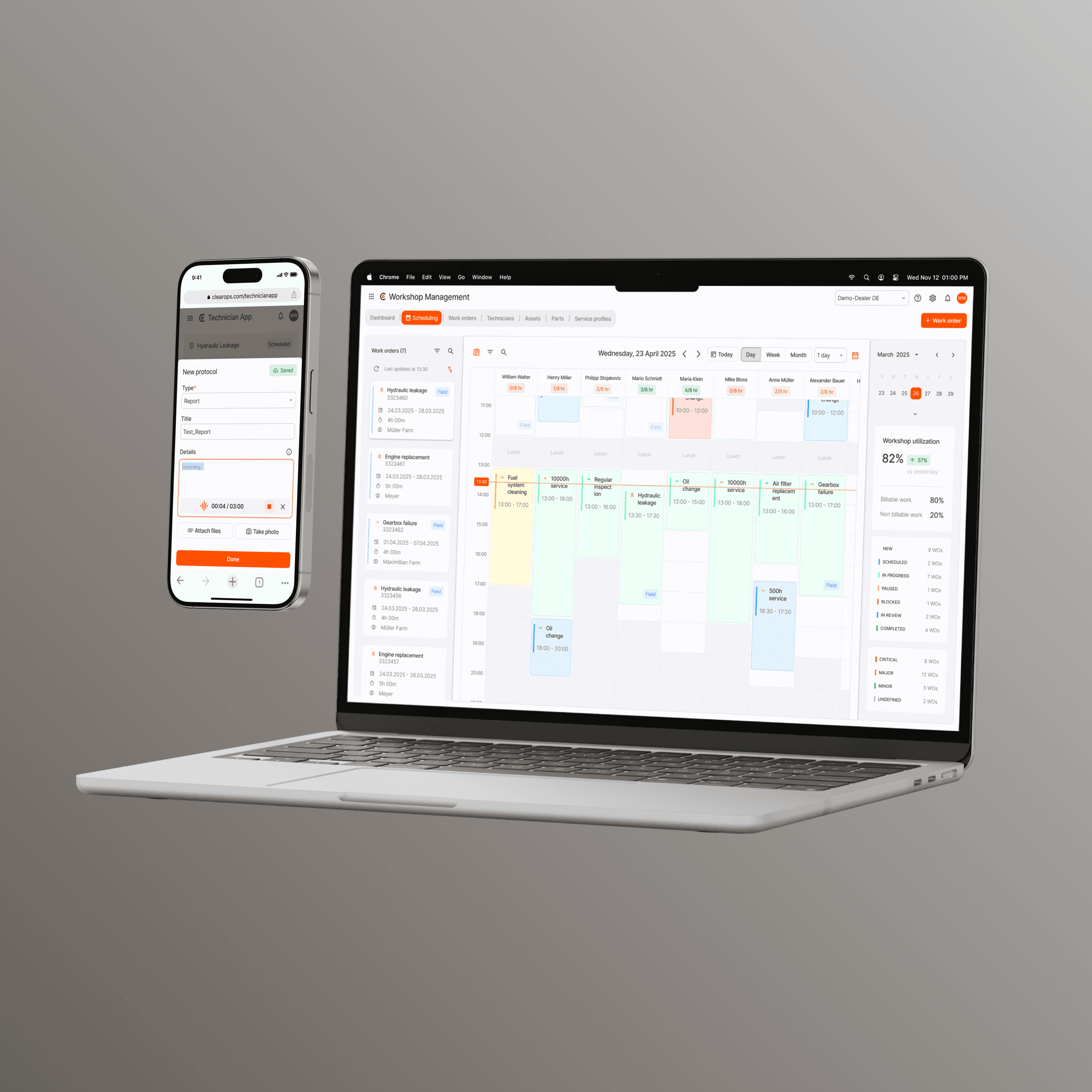
Dashboard: A high-density dashboard providing instant visibility into KPIs & technician availability - features entirely missing from v1.
Intelligent scheduling: A clear visibility into the workshop & technician utilization helped the workshop managers to schedule jobs without conflicts.
Mobile app: A redesigned mobile experience that reduced starting a job & logging work hours to just three taps.
Speech-to-text: Technicians now talk to the app to record findings (e.g., "valve ruptured, system damage..."), keeping their hands on the equipment.
AI enhancement: An AI feature that refines informal transcripts into professional, customer-ready reports.
Impact & lessons learned
From shelf-ware to revenue: By solving usability blockers, the app became a viable product line generating €36k ARR.
Adoption turnaround: Success was achieved by making the software faster than the manual alternative.
Future of design: Leveraging AI for persona-based reviews proved that a solo designer can achieve the rigor of a full research team by using the right tools at the right time.
DISCOVER MORE