Role
Company
Designed a safety-critical monitoring system for autonomous shuttles, bridging the gap between Level 4 tech and legacy operator mental models to ensure operational trust.
Overview
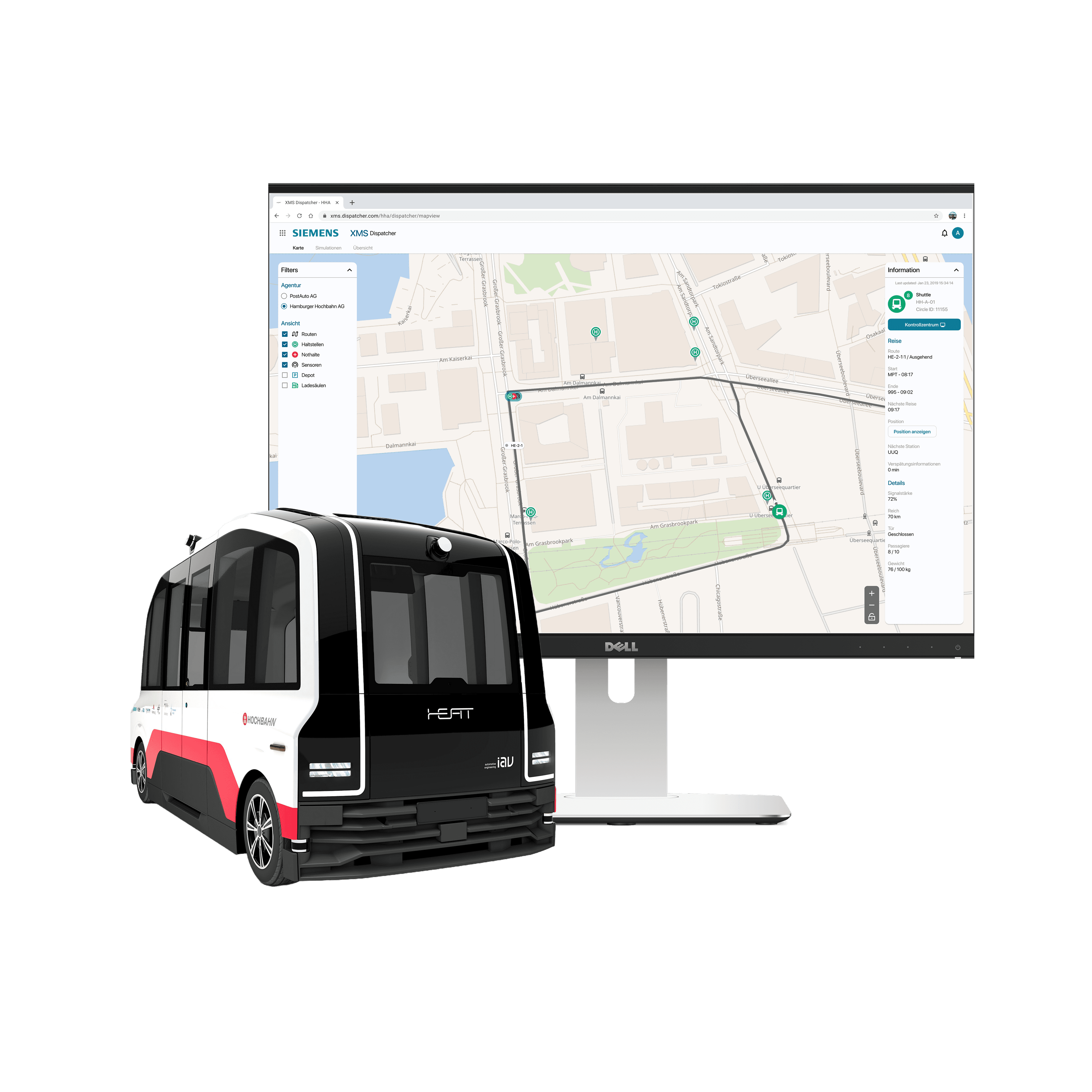
Challenge: Hamburger Hochbahn AG (HHA) needed to integrate Germany's first autonomous shuttle (HEAT) into regular city traffic. An external agency had failed to deliver a design that worked. The system had to bridge the gap between traditional driver-led mental models & a Level 4 Autonomous reality, all while strictly adhering to Siemens’ Newton Design System.
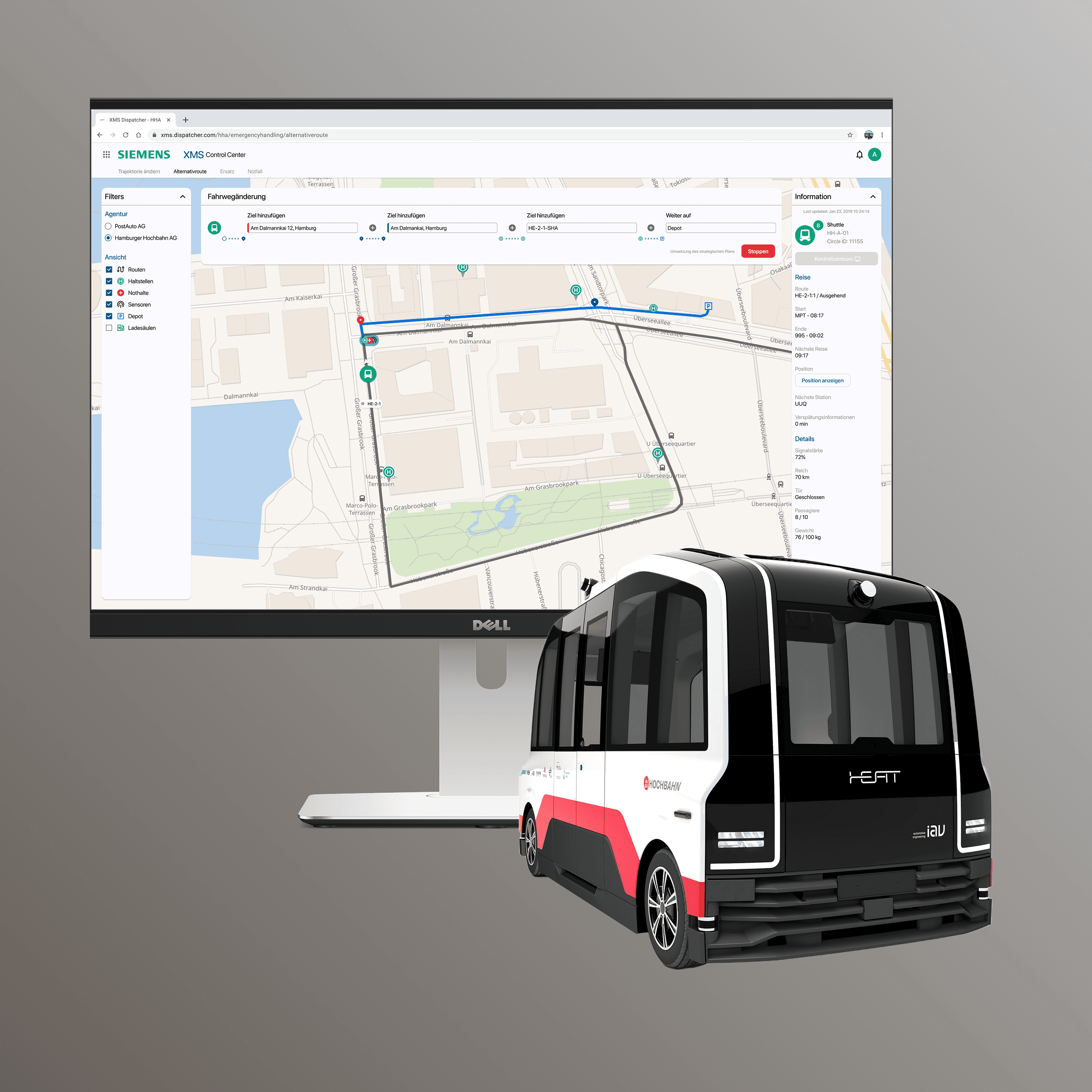
Solution: I led the UX recovery, replacing a bloated agency concept with a dual-view monitoring system (Geographic Map + Schematic Line Diagram). This allowed controllers to manage high-tech autonomous data using the familiar mental models they’ve used for decades.
Successful pilot: Enabled the first real-world autonomous shuttle tests in Hamburg.
Agency rescue: Streamlined a complex & non-resonant external design into a production-ready Siemens tool.
Validated trust: Conducted on-site usability testing in the HHA Control Center, achieving high confidence scores from veteran controllers.
Discovery
The agency rescue
Conflict: When I joined the project, the stakeholders were frustrated with a futuristic design by some external agency that looked great but failed under professional monitoring conditions.
Approach: Conducted deep-dive workshops with HHA operational leads to bridge the gap between Technical Specifications & Human Needs.
Key Insight: While the system was autonomous, the controllers felt blind. They required a safety net, not just a map, to trust the vehicle's decisions.
Fix: Stripped the visual noise to transform a flashy concept into a Safety-Critical Tool where every UI element served a specific decision-making purpose for the controller.
Solution
Familiarity as a feature
Strategy: Veteran controllers have relied on linear schematics for 20+ years. Forcing a Map-only mental model during a high-stakes Level 4 pilot was a safety risk.
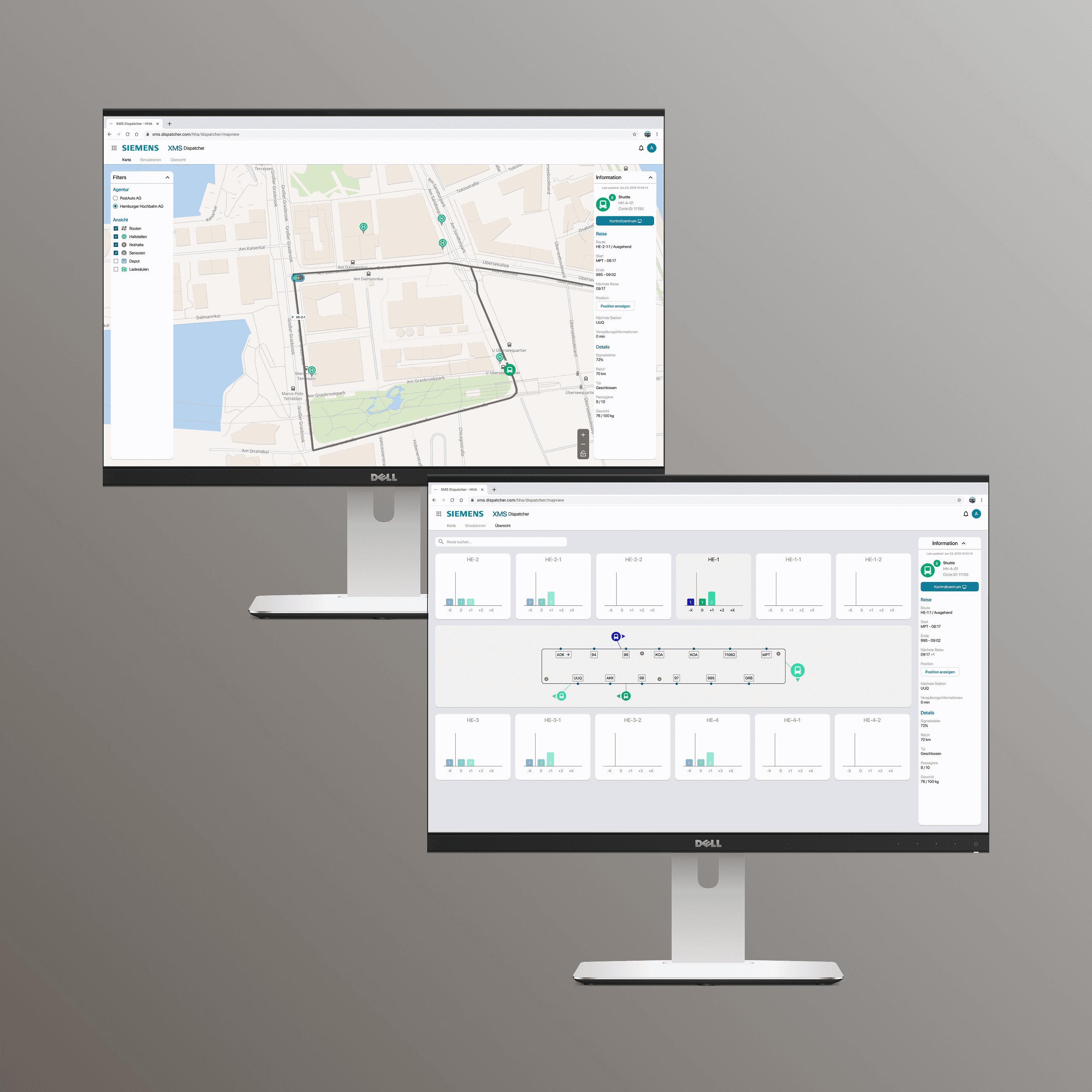
Dual-view hybrid: Designed a seamless toggle between two critical perspectives: Geographic map: Real-time spatial awareness & sensor data (Lidar/Radar) in traffic.
Schematic line diagram: The legacy view for instant delay calculation & route status.
Impact: Reduced the learning curve to near-zero. Controllers could focus on managing autonomous exceptions rather than struggling with a new interface.
Persona
Dispatcher (Traffic controller)
Primary goal: Public safety & On-time routes
Environment: Control room (Multi-monitor / High stress)
Physical context: Seated, High-focus, Glance-based
Mental model: Schematic-driven (Line Diagrams)
On-site validation
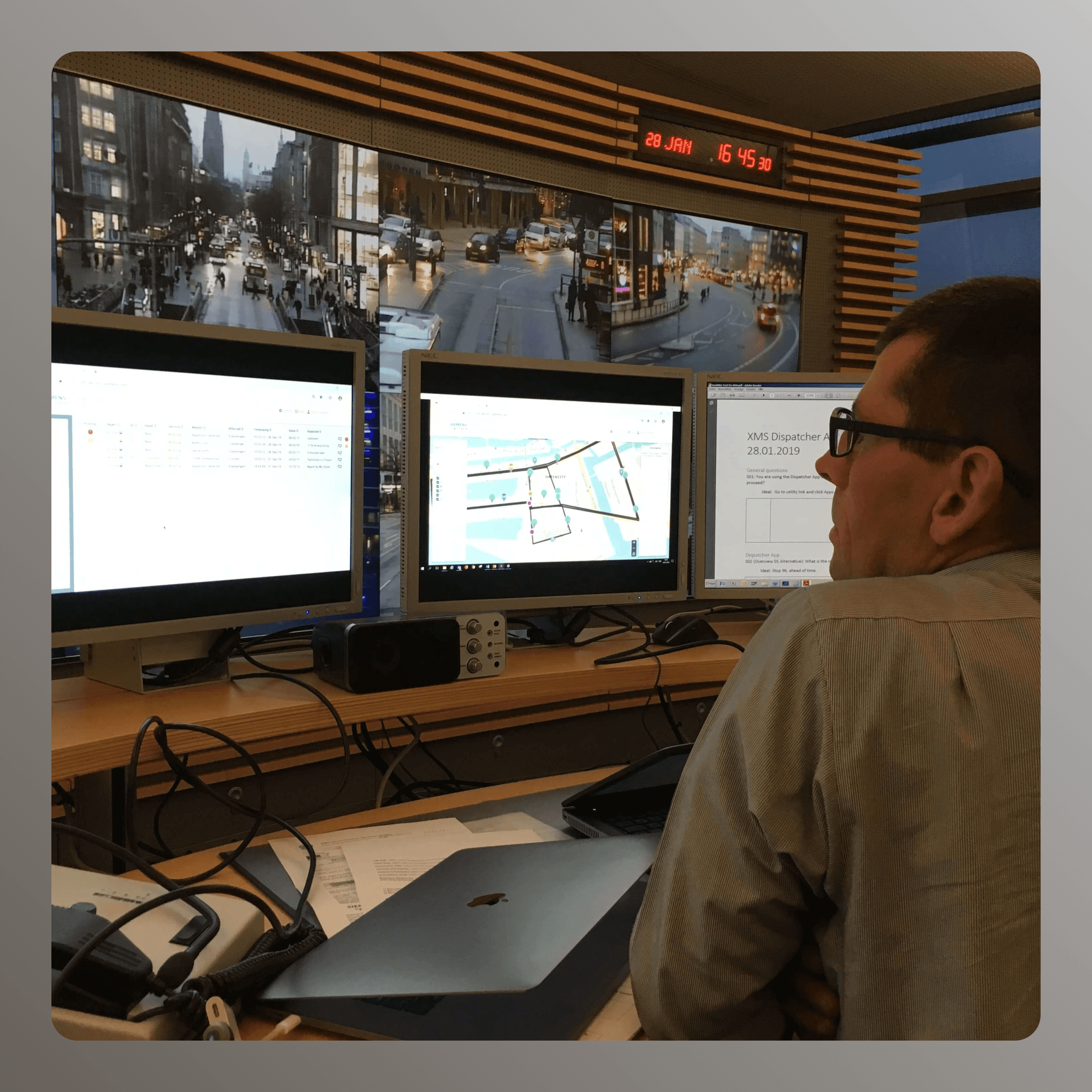
I conducted usability testing directly in the HHA control center with their traffic controllers.
Users: Veteran traffic controllers ranging from Tech-Savvy to Traditionalists.
Method: I used a high-fidelity Adobe XD prototype to simulate emergency stop scenarios and sensor failures.
Insight: Testing proved that Product Owner desires (more features) clashed with Operator needs (less distraction). I used this evidence to push back on feature-creep & keep the UI glanceable.
Constraints
Designing for Level 4
Autonomous vehicles bring unique UX challenges that traditional buses don't have:
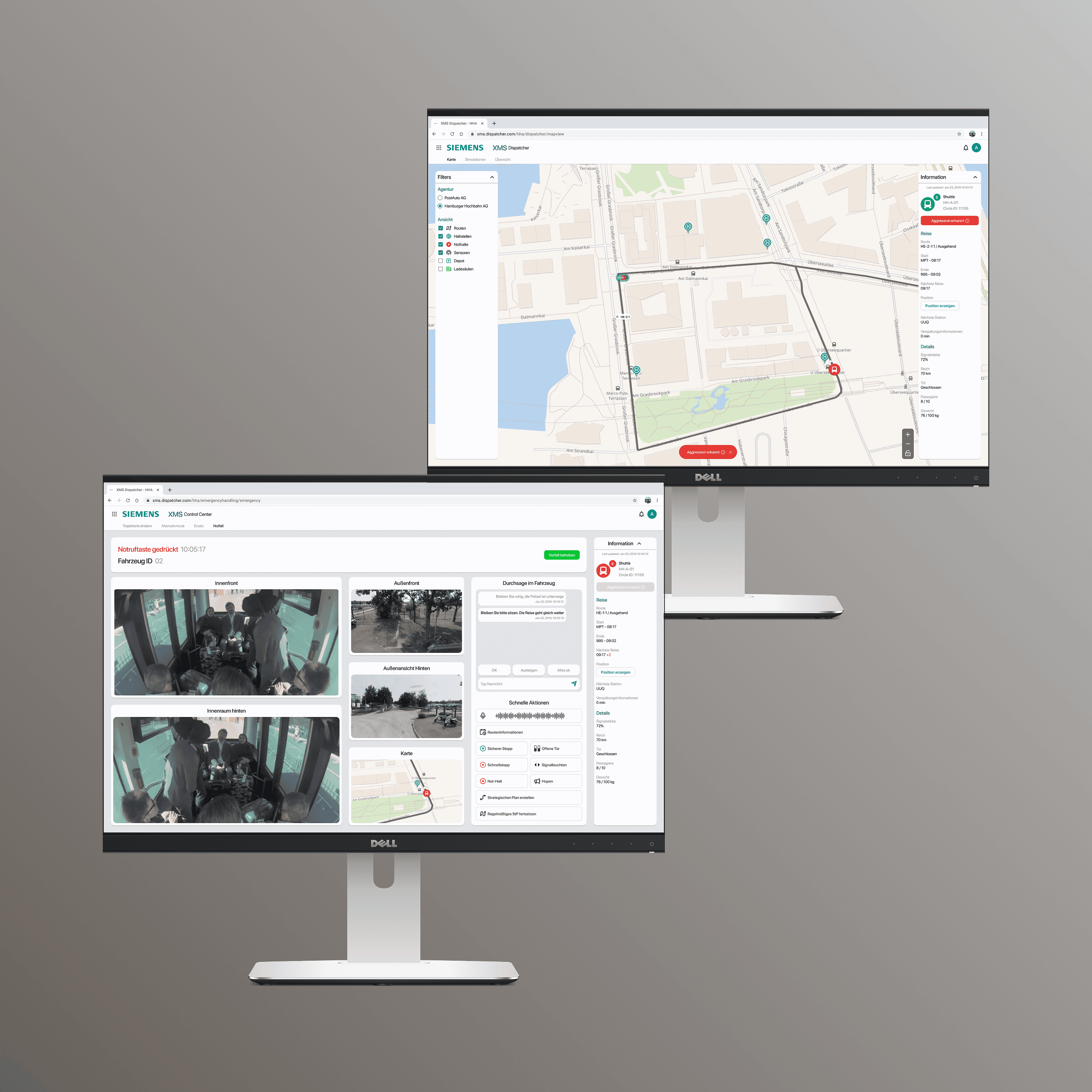
Trust & transparency: Since the driver is a computer, the UI had to show why the bus was doing what it was doing. I designed status widgets that clearly visualized sensor health & communication with roadside units.
Legal hands-Off: Remote steering is illegal. Therefore, the UI had to focus on Exception Management, alerting the controller only when human intervention (like stopping the route or calling an attendant) was required.
Legacy & impact
Foundation: The HEAT pilot successfully operated in Hamburg until late 2021. The UX patterns I established for autonomous monitoring are now part of the foundation for Hamburg’s next generation of driverless public transport (ALIKE project).
Lesson learned: In safety-critical systems, Familiarity is a Feature. By keeping the line diagram view, we reduced the learning curve and increased user trust.
DISCOVER MORE